
LASIK Surgery Cost in India: Safe & Advanced Vision Correction
Compare Femto-LASIK, SMILE, PRK and ICL procedures at accredited eye hospitals in India. VRH Healthcare facilitates expert opinions, hospital selection and transparent pricing for international patients.
Verified Hospitals
JCI & NABH Accredited Centres only.
Zero Wait Time
Priority appointments for international patients.
What is LASIK Surgery Cost in India and How Does It Work?
LASIK surgery in India is an advanced laser vision correction procedure designed to permanently reduce or eliminate dependence on glasses and contact lenses. It corrects refractive errors such as myopia (nearsightedness), hyperopia (farsightedness), and astigmatism by reshaping the cornea using precision excimer and femtosecond laser systems.
Refractive surgery options in India include standard LASIK, bladeless Femto-LASIK, SMILE (Small Incision Lenticule Extraction), PRK, and ICL (Implantable Collamer Lens). The appropriate technique is selected after detailed corneal mapping, pachymetry, retinal evaluation, and dry eye assessment to ensure safety and long-term stability.
One of the main reasons international patients choose LASIK surgery in India is cost advantage without compromising safety or technology standards. Accredited eye hospitals use advanced laser platforms comparable to the UK and USA, often at significantly lower prices.
Most LASIK procedures take 10–20 minutes per eye, require no stitches, and allow rapid visual recovery. VRH Healthcare acts as a medical facilitator—helping international patients obtain independent expert opinions, evaluate suitability, compare hospitals, understand LASIK cost in India, and coordinate travel and follow-up planning.
Types / Variants of LASIK and Refractive Surgery
LASIK (Laser-Assisted In Situ Keratomileusis)
A widely performed laser eye surgery that reshapes the cornea to correct vision, involving a corneal flap.
PRK (Photorefractive Keratectomy)
A surface ablation technique where the outer layer of the cornea is removed before laser reshaping.
SMILE (Small Incision Lenticule Extraction)
A minimally invasive laser procedure creating a lenticule within the cornea, removed through a small incision.
ICL (Implantable Collamer Lens)
A tiny, flexible lens implanted inside the eye to correct vision, suitable for higher prescriptions.
Your surgeon explains why a particular approach is recommended for you.
Technology & Techniques
India's leading eye care centres utilise advanced laser and diagnostic technologies to ensure precision and optimal outcomes for refractive surgeries. These state-of-the-art systems allow for highly customised treatment plans tailored to each patient's unique eye characteristics. In India, LASIK and Refractive Surgery may be performed using:
Benefits
- Significantly improved vision clarity, often achieving 20/20 or better.
- Reduced or eliminated daily dependence on glasses or contact lenses.
- Quick recovery time for many procedures, allowing a swift return to routine.
- Enhanced quality of life, offering freedom in sports and daily activities.
- Long-lasting vision correction results for the vast majority of patients.
- Minimally invasive nature of most techniques, ensuring patient comfort.
Limitations
- Not suitable for everyone; strict criteria based on eye health and prescription apply.
- Potential for temporary side effects like dry eyes, glare, or halos, especially at night.
- Rare but possible complications, though overall safety profiles are excellent.
- Individual healing responses can vary, influencing the final visual outcome.
- May occasionally require an enhancement surgery to fine-tune results.
- Does not prevent age-related vision changes such as presbyopia or cataracts.
Diagnostics & Pre-Arrival Work-Up
Pre-Arrival & Travel Checklist
How the Procedure is Done (Step-by-Step)
Pre-operative Assessment
Thorough eye examinations and measurements are conducted to determine suitability and plan the precise surgical approach.
Anaesthesia and Eye Preparation
Topical anaesthetic eye drops are applied to numb the eye, and the eye area is cleaned and prepared for the procedure.
Corneal Flap Creation (for LASIK)
A femtosecond laser or microkeratome creates a thin, hinged flap on the corneal surface, which is then gently lifted.
Laser Reshaping
An excimer laser precisely reshapes the underlying corneal tissue to correct the refractive error, guided by pre-operative mapping.
Flap Repositioning (for LASIK)
The corneal flap is carefully repositioned, adhering naturally without stitches, protecting the treated area.
Post-procedure Care
Protective eye shields or drops are applied, and detailed instructions for post-operative care and follow-up are provided.
Top Specialists for Ophthalmology

Dr. Anita Sethi
Ophthalmology
Max Super Speciality Hospital, Saket, New Delhi
Dr. Anita Sethi, top ophthalmologist in Delhi with 35+ years, specializes in Lasik, cataract, and oculoplastic surgeries at Max Multi Speciality Centre.
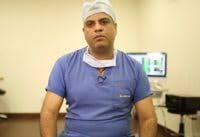
Dr. Suraj Munjal
Ophthalmology
The Sight Avenue, New Delhi
Dr. Suraj Munjal, leading Delhi ophthalmologist with 20+ years, excels in LASIK, cataract, and corneal transplants at The Sight Avenue.

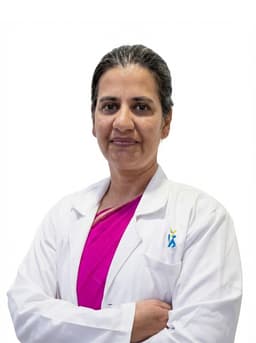
Dr. Parul Maheshwari Sharma
Ophthalmology
Fortis Memorial Research Institute, Gurugram
Dr. Parul Sharma, top Gurugram ophthalmologist with 25+ years, excels in Lasik, cataract, and glaucoma care at FMRI.
Dr. Uma Mallaiah
Ophthalmology
Indraprastha Apollo Hospital, New Delhi
Dr. Uma Mallaiah is a senior ophthalmologist at Apollo Delhi with 23+ years experience in cataract, glaucoma, LASIK and oculoplasty eye surgery.
Expected Outcomes & What Success Means
Recovery & Follow-Up Timeline
Fitness to fly and activity limits are centre-specific.
How Quickly Can I Start?
Second Opinion
12-48 hours
Typically received after sharing medical reports.
Scheduling
1-2 working days
Depending upon the availability of the specialist
Visa Invitation Letter (VIL)
1-2 working days
issued promptly to support your medical visa application.
LASIK Surgery Cost in India & Price Factors
This page provides an overview of typical costs and influencing factors. A personalised cost estimate is shared after a medical review of your reports—please contact us to request your individual estimate.
How VRH Healthcare Helps
VRH Healthcare is not a hospital. We act as your medical facilitation and patient-navigation partner, helping you make informed decisions and move smoothly through care in India.
International Patient Services
Your Care Journey with VRH
A simplified step-by-step guide to your treatment experience.
Share medical reports
Receive an expert second opinion and indicative estimate
Plan travel, visa, and appointments
Treatment with on-ground coordination
Discharge and ongoing tele-follow-ups
Share medical reports
Receive an expert second opinion and indicative estimate
Plan travel, visa, and appointments
Treatment with on-ground coordination
Discharge and ongoing tele-follow-ups
Where We Serve: Countries We Support
Middle East
Language support, visa assistance, and coordinated care planning for vision correction surgery.
Africa
Support for diagnostics review, travel planning, and post-treatment follow-up.
Central Asia & CIS
Interpretation services and hospital coordination for surgical care.
South Asia
Quick access to opinions, scheduling, and continuity of care.
U.K. & USA
Second opinions, cost-sensitive planning, and post-return tele-follow-ups.
Other Countries
Customised support based on individual travel and care needs.